
Here is a scene that plays out in lakhs of Indian homes this week. A phone you have been eyeing flashes "50% OFF!" in a red banner. Your thumb hovers over Buy Now. But scroll back three weeks and the same phone, on the same page, was selling for almost exactly today's "sale" price — sometimes for less. The discount is real ink on a fake number. This guide names the six tricks behind that banner, one by one, and ends with the two-minute check that tells you the real price of anything.
Trick 1 — the inflated MRP. The strike-through price is usually the launch MRP — the highest price the product ever carried, often from a year or two ago. A TV launched at ₹69,099 that has sold at ₹32,000 for months can still legally wear a "57% off" banner at ₹29,999. The percentage is calculated against a price nobody has paid in ages. The fix is simple: never judge a deal by the percentage. Judge it by the price itself, against what the product sold for recently.
Key Points
- The strike-through MRP is usually a years-old launch price — the percentage off it means almost nothing
- Prices often rise quietly 2–3 weeks before a sale, then "crash" back to normal under the banner
- Headline prices often assume an exchange phone in perfect condition plus one specific bank card
- Coupons carry caps, minimum orders and exclusions — judge a code by the final payable figure only
- The real check takes two minutes: 90-day price range, lowest-ever price, and today's payment-page price
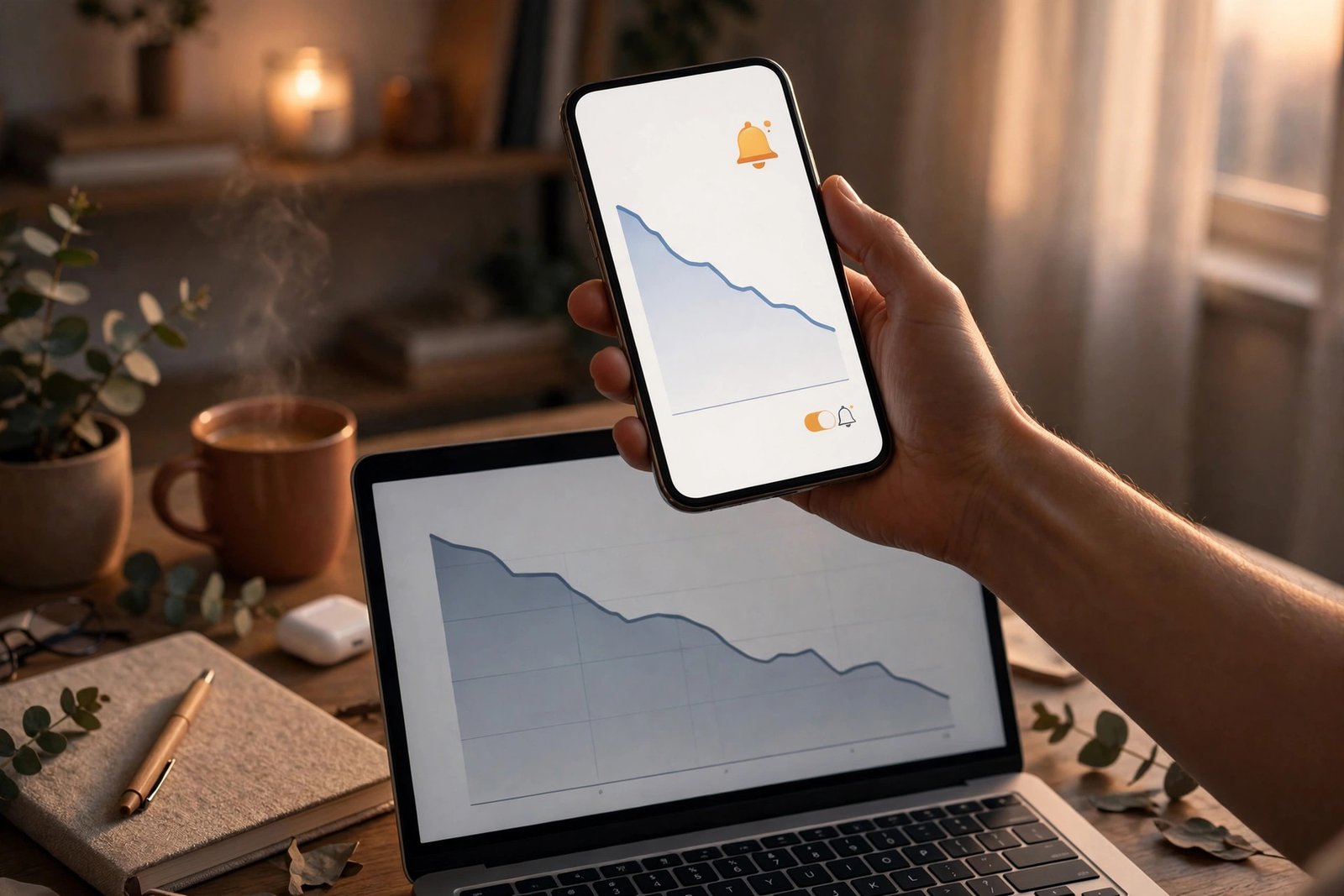
Trick 2 — the pre-sale price bump. Two or three weeks before a big sale, the selling price quietly climbs — ₹1,000 here, ₹2,000 there — so that on sale day it can "crash" back to normal under a giant discount banner. On a price-history chart this is unmistakable: a small hill just before the sale, then a cliff back to the usual level. It is the single most common trick in Indian sale seasons, and the easiest to catch, because the chart remembers what the banner hopes you forgot.
Trick 3 — the headline price that is not your price. Read the fine print under any suspiciously low phone price and you will find some combination of "with exchange" and "bank offer applied". That number assumes you hand over a specific old phone in perfect condition and pay with one particular bank's card. Remove either condition and the price jumps by thousands. The honest number is the one on the payment page, with your card and no exchange selected — compare everything against that.
Trick 4 — strikethrough games. The crossed-out "was" price is not always this product's price at all. Sometimes it belongs to a higher variant — the 256 GB model's MRP struck through next to the 128 GB model's price. Sometimes it is a "list price" the store itself never charged. And on marketplaces, a third-party seller can set an absurd MRP on their own listing, which is why the same product shows wildly different "discounts" from different sellers. When two listings of the same product claim different percentages off, at least one strike-through is fiction.
Trick 5 — the coupon with a ceiling. "Extra ₹2,000 off with code" sounds flat; the terms rarely are. Codes carry minimum order values, category exclusions, and — the quiet one — a maximum discount cap, so a "20% off" code on a ₹30,000 phone may stop helping at ₹1,500. Some codes also quietly exclude the exact brand you are buying. Always apply the code in the cart and read the final payable figure; a code that cannot survive checkout is not a discount, it is decoration. Our coupons page lists codes with the terms we verified, for exactly this reason.
Trick 6 — countdown timers and vanishing stock. "Sale ends in 04:59:32" — refresh the page tomorrow and the timer is back, because for most listings the "sale" is a rolling banner, not an event. "Only 2 left!" deserves the same scepticism: on many pages the number resets, or refers to one seller's stock while five other sellers hold the same product. Real deadlines exist — Flipkart's Black Friday Sale genuinely runs 21–27 November this year — but a timer on a product page is pressure, not information. Pressure is a reason to slow down, not speed up.
So how do you check the real price? Three numbers, two minutes. First, the 90-day range: what has this product actually sold for over the last three months? Second, the lowest price ever recorded. Third, today's payment-page price, with no exchange and your own card. If today's price sits at or below the recent range, the deal is real. If it sits above the 90-day average under a 50%-off banner, you are looking at tricks 1 and 2 holding hands. Our complete guide to tracking prices in India walks through the exact tools — Keepa for Amazon, PriceHistory.app and BuyHatke for Flipkart — with the setup for each.
One more check that costs nothing: open the same product on the rival store. A "Black Friday exclusive" that is ₹500 cheaper on the other app, with no banner at all, tells you everything about the banner. And if the product is a phone, read our Black Friday smartphone buying guide before you pay — exchange grading and bank-offer fine print are where phone "deals" quietly shrink.
None of this means Black Friday is a scam — real deals exist this week, and our deal box below is one we verified ourselves: the price was checked against the live listing, and the code was tested at checkout level. It means the banner is not the deal. The price history is the deal. Two minutes of checking is the difference between saving ₹3,000 and donating it to a marketing department.